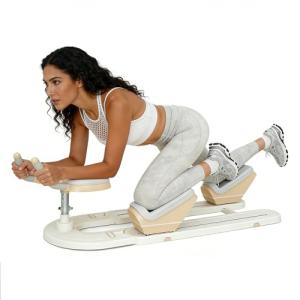
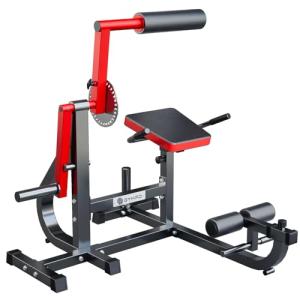
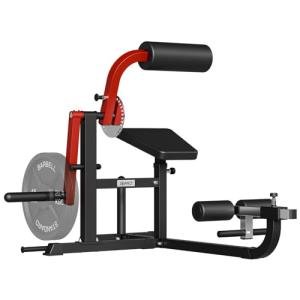
What Are Back Machines?
Back machines are a category of gym equipment engineered to isolate, strengthen, and develop the muscles of the upper, mid, and lower back. Unlike free-weight exercises, which demand a lot of coordination and prior technique, back machines guide your movement through a fixed or semi-fixed range of motion. This makes them especially valuable for beginners learning proper pulling mechanics, for experienced lifters who want to push heavier loads safely, and for anyone recovering from injury who needs controlled, predictable resistance.
The back is actually a complex group of muscles — not just one thing — and different machines target different parts of it. That's why this category is so broad, and why understanding what each type does is worth your time before you invest.
The Muscles Back Machines Target
To make sense of why there are so many different machines in this category, it helps to understand the anatomy you're working with.
The latissimus dorsi — or lats — are the large, wing-shaped muscles that run from your mid-back up into your armpits. Developing them creates that wide, V-shaped torso look and powers all pulling movements.
The trapezius covers your upper back and neck area. The upper traps are what give you that "yoke" look across the shoulders; the mid and lower traps stabilize your shoulder blades and support posture.
The rhomboids sit between your shoulder blades and are critical for keeping your shoulders pulled back and your posture upright. Most people who sit at computers all day have chronically weak rhomboids — and it shows.
The rear deltoids are technically shoulder muscles, but they work together with the upper back on most rowing movements. Building them out balances the shoulder joint and reduces injury risk.
The spinal erectors run along either side of your spine and are responsible for keeping you upright, supporting the lumbar region, and generating force in virtually every compound movement you do.
The lower back, when trained properly, is one of the most important injury-prevention investments you can make — especially if you do any heavy lifting or spend long hours seated.
Types of Back Machines
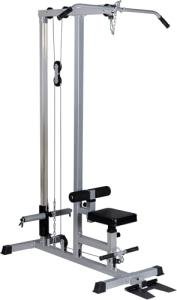
Lat Pulldown Machines
The lat pulldown is probably the most iconic back machine in any gym. You sit down, reach up and grip a bar or handles overhead, then pull them down toward your chest or behind your neck. The movement replicates the mechanics of a pull-up — but because you can adjust the weight stack, it's accessible to anyone regardless of upper body strength.
Lat pulldowns hammer the latissimus dorsi with every rep, and by changing your grip width (wide, neutral, or close) you can shift emphasis across different parts of the lats and involve more or less of the biceps. Many machines also offer a mid-row attachment at the base, making them a two-in-one investment for smaller spaces.
Seated Row Machines
Where the lat pulldown works a vertical pulling motion, the seated row machine works a horizontal pull — and that distinction matters enormously for building a well-rounded back. Seated rows zero in on mid-back thickness, hitting the rhomboids, mid traps, and rear delts in a way that pulldowns simply don't.
You'll find two main types: selectorized seated rows, which use a weight stack and are quick to adjust between users, and plate-loaded seated rows, which offer a more raw, free-weight feel and are popular in serious strength training environments.
Some seated row machines feature a chest pad to brace against, which removes momentum from the equation and forces your back to do all the work. These chest-supported variations are particularly useful for people who tend to rock and heave on standard rows.
T-Bar Row Machines
The T-bar row is a classic back builder that's been around for decades, and for good reason. It loads the back through a similar arc to a bent-over barbell row but offers more support and stability. Plate-loaded T-bar machines let you pile on the weight and develop serious thickness through the mid and upper back. The landmine-style pivot point creates a natural arc that feels biomechanically smooth, and the close-grip handle positions allow for a strong contraction at the peak of each rep.
Low Row Machines
Low row machines sit users close to the floor and pull from a low cable anchor point. This angle changes the line of pull compared to a standard seated row, placing more emphasis on the lower portion of the lats and helping develop that full, sweeping lat development from armpit to lower back. If you've ever wondered how elite bodybuilders get that thick, detailed back that's visible from every angle, low rows are a big part of the answer.
Hyperextension Benches and Roman Chairs
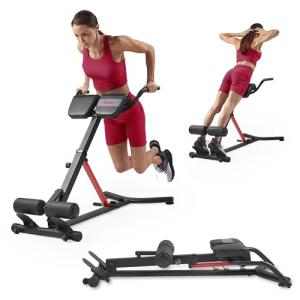
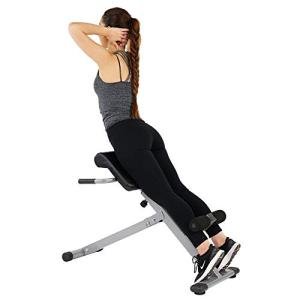
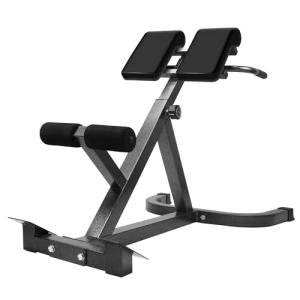
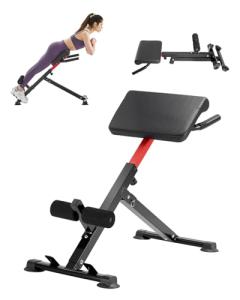
These are the machines that often get overlooked in favor of their flashier pulling-movement counterparts — but they might be the most important back machines in the gym for long-term health. Hyperextension benches allow you to perform back extensions, which directly strengthen the spinal erectors and the entire posterior chain including the glutes and hamstrings.
A standard hyperextension bench holds you at a 45-degree angle. A horizontal or flat version is sometimes called a Roman chair. Both are invaluable for lower back development, and both can be loaded with weight (typically a plate held at the chest) as you get stronger.
If you sit at a desk all day, if you have a history of lower back discomfort, or if you do heavy compound lifting like deadlifts and squats, incorporating back extensions into your routine is one of the smartest things you can do.
Glute Ham Developers (GHD)
The GHD machine is more commonly associated with posterior chain training for athletes, but it earns its place in the back machine category because of how effectively it trains the spinal erectors and lower back alongside the hamstrings and glutes. GHD back extensions are a step up in difficulty and effectiveness from standard hyperextension benches, and they're a staple in CrossFit facilities, athletic training centers, and serious strength gyms.
Assisted Pull-Up and Chin-Up Machines
These machines use a counterbalanced weight system to reduce the amount of bodyweight you're lifting during a pull-up or chin-up. They're excellent for beginners building toward unassisted pull-ups, and they're surprisingly useful for advanced trainees who want to work in higher rep ranges after their raw pulling strength is exhausted. The assisted pull-up movement recruits the lats, biceps, core, and rear delts — it's one of the most complete upper body exercises you can do, and this machine makes it available to everyone.
Selectorized vs. Plate-Loaded: Which Is Right for You?
One of the key decisions when choosing a back machine is whether to go selectorized (weight stack with a pin) or plate-loaded.
Selectorized machines are quick to adjust, consistent in feel, and great for high-volume training, circuit workouts, and gym environments where multiple users rotate through the equipment. They typically have a smoother, more controlled feel throughout the range of motion.
Plate-loaded machines offer a more tactile, free-weight style experience. They tend to allow heavier loading, and many serious lifters prefer the feel of bumping against real iron. They're also simpler mechanically — fewer cables, pulleys, and moving parts mean less maintenance over time.
For home gyms where you're the only user, either works well. For commercial facilities, a mix of both is ideal.
Home Gym vs. Commercial Grade: Understanding the Difference
Not all back machines are built the same. Equipment marketed for home use is typically lighter, more compact, and designed for lower daily usage volumes — perhaps a few uses per day by one or two people. Commercial-grade machines are engineered for continuous use by dozens or even hundreds of users daily, built with heavier steel frames, reinforced welds, higher-capacity weight stacks, and more durable upholstery.
If you're outfitting a home gym, a well-built residential machine will serve you perfectly well for years. If you're setting up a commercial facility, cutting corners on machine grade is a false economy — the maintenance costs and equipment failures will quickly exceed the upfront savings.
How to Choose the Right Back Machine
Think about your goals first. Are you primarily interested in building a wider back, a thicker back, or a stronger lower back? Width comes from vertical pulling movements (lat pulldowns, assisted pull-ups). Thickness comes from horizontal pulling movements (seated rows, T-bar rows, low rows). Lower back resilience comes from extension-based machines (hyperextensions, GHDs).
Consider your available space. Lat pulldown and row combo machines can be more compact for smaller home gyms. Standalone T-bar machines and GHDs take up more floor space.
Think about your current fitness level. Beginners tend to thrive on selectorized machines where small weight increments are easy to manage. More advanced lifters often gravitate toward plate-loaded options for heavier loading and a rawer training feel.
Don't overlook build quality. Smooth pulleys, quality cables, solid welds, and comfortable padding aren't luxuries — they're the difference between a machine that enhances your workout and one that frustrates it. A machine that feels rough, unstable, or uncomfortable will demotivate you over time, no matter how good the price was.
Building a Complete Back Training Program
The ideal approach to back training uses multiple machines to cover all the movement patterns. A well-rounded back workout might include a vertical pull (lat pulldown or assisted pull-up), a horizontal pull (seated row or T-bar row), and a lower back extension movement (hyperextension bench or GHD). Together, these three movement types cover the entire back musculature and create the balanced development that improves both aesthetics and functional strength.
Frequency matters too. Most people benefit from training their back at least twice per week. Because the back muscles are large and recover relatively well, they can handle volume — and they often need it, especially if you're also doing a lot of pressing movements that pull the shoulders forward.
Back machines aren't a niche addition to a gym — they're essential. A strong back supports every other lift you do, protects you from injury, counteracts the postural damage of modern sedentary life, and builds the kind of physical capability that makes everyday life genuinely easier. Whether you're picking out a single piece of equipment for a spare bedroom gym or stocking an entire commercial facility, investing in quality back machines is one of the highest-return decisions you can make.
The right machine, used consistently and with good form, will change how you move, how you feel, and how you perform — for years to come.