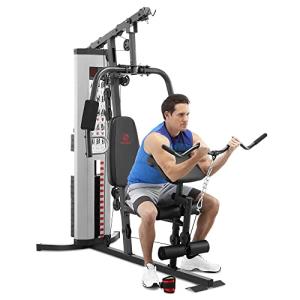
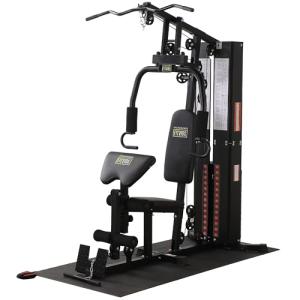
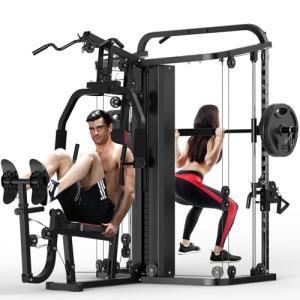
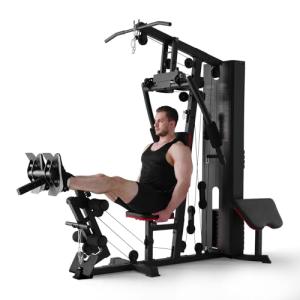
What Is a Home Gym System?
A home gym system is more than just a single piece of equipment. It's a curated setup of machines, accessories, and training tools designed to give you a complete workout experience without ever leaving the house. The best systems are modular — meaning you can start small and expand over time as your fitness evolves and your budget allows.
Whether you're carving out space in a spare bedroom, converting your garage, or squeezing a compact rig into a basement corner, there's a home gym system that works for you.
The Core Categories of Home Gym Equipment
Power Racks and Squat Stands
The power rack is the centerpiece of most serious home gym setups. It's the anchor point for squats, bench press, pull-ups, and a whole range of barbell movements. When shopping for a rack, you'll encounter a few main styles:
A full power cage gives you four vertical uprights with adjustable safety bars or pins. This is the safest option for solo lifters training without a spotter — if you miss a rep, the safeties catch the bar. Look for racks with at least 1,000 lb weight capacity and 2x3 or 3x3 inch steel tubing for durability.
A half rack or squat stand takes up less floor space and costs less, but trades some safety features. Great for lifters who have solid technique or train with a partner nearby.
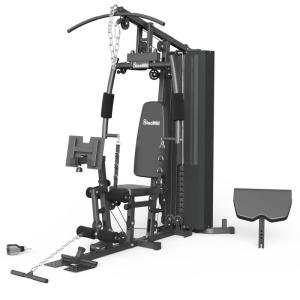
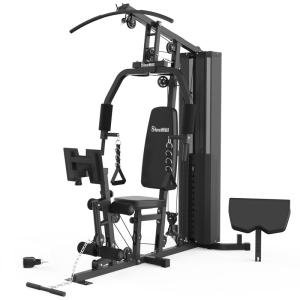
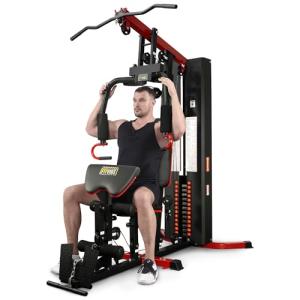
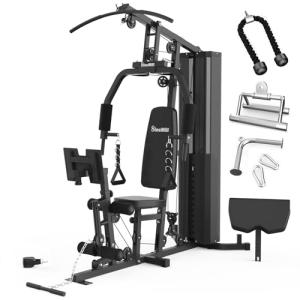
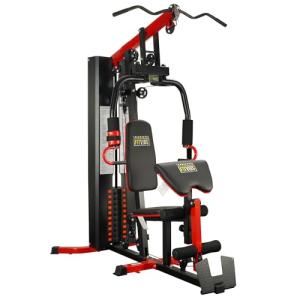
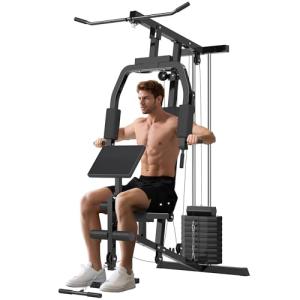
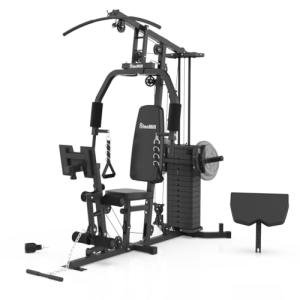
Many premium racks now come as part of a larger system with attachments for lat pulldowns, cable crossovers, dip bars, and landmine brackets — turning a single structure into a full training station.
Barbells and Weight Plates
A quality barbell is arguably the single most important piece of equipment in a home gym. You'll use it for squats, deadlifts, bench press, overhead press, rows, and more. Here's what to look for:
Bar whip and tensile strength matter depending on how you train. Olympic lifting benefits from a bar with more flex (whip), while powerlifting and general strength work favors a stiffer bar. Most home gym lifters do best with a versatile all-purpose barbell rated to at least 190,000 PSI tensile strength.
Weight plates come in bumper plate or iron plate varieties. Bumper plates are rubber-coated, quieter, and safer to drop — ideal if you're doing Olympic lifts or training on concrete. Iron plates are more compact and often more affordable for building a large total weight supply.
Budget for at least 300–400 lbs of total plate weight if you plan on strength training seriously.
Functional Trainers and Cable Machines
Cable machines bring a level of exercise variety that free weights alone can't match. The ability to adjust the angle and direction of resistance opens up dozens of exercises — cable flyes, face pulls, tricep pushdowns, woodchops, pallof presses, and more.
For home use, functional trainers (also called dual cable machines) are the gold standard. They feature two independent weight stacks or weight plate loading systems with fully adjustable pulleys. High-quality models include 180-degree or even 360-degree pulley adjustment, smooth carriage systems, and a wide range of handle attachments.
If floor space is tight, compact cable systems that attach to a power rack are a smart compromise — you get cable functionality without dedicating a separate footprint.
Cardio Equipment
Cardio has its place in any well-rounded home gym system. The right choice depends entirely on how you prefer to train and how much space you have.
Treadmills remain the most popular home cardio machine. Look for models with at least 3.0 CHP motor output, a deck size of 20x55 inches or larger, and incline capabilities if you want to mix in walking workouts or HIIT sessions.
Rowing machines have exploded in popularity for good reason — they train your entire body, build serious cardiovascular fitness, and are lower-impact on your joints than running. Air rowers give you natural resistance feel; magnetic rowers are quieter and smoother.
Assault bikes (fan bikes) are brutal in the best way. They're compact, require no electricity, and deliver an intense full-body conditioning session in a short amount of time.
Ski ergs and VeraClimbers have made their way into home gyms for those wanting something different that targets the upper body and core in ways other cardio equipment doesn't.
Dumbbells and Kettlebells
No home gym system is complete without free weights in some form. The question is whether to go with fixed dumbbells, adjustable dumbbells, or a combination.
Fixed dumbbells (traditional hex or round head) are the most durable and quickest to grab and go. The downside is cost and space — a full set from 5 to 100 lbs takes up significant room and several thousand dollars.
Adjustable dumbbells have improved dramatically in recent years. Dial-select systems (like those from popular premium brands) let you switch weights in seconds, which is a genuine game-changer for circuit training and supersets. A good set covers 5 to 90 lbs and takes up the footprint of a single dumbbell.
Kettlebells deserve their own spot in your setup. They offer a unique training stimulus for swings, Turkish get-ups, cleans, and pressing patterns. Start with a few key weights — typically something light for conditioning work and something heavier for strength movements.
Flooring: The Foundation Everyone Forgets
Before you place a single piece of equipment, you need to think seriously about flooring. The right gym flooring protects your equipment, your joints, your subfloor, and your home from noise and vibration.
Rubber stall mats (3/4 inch thick, 4x6 feet) are the workhorse choice — affordable, incredibly durable, and widely available at farm supply stores. They're heavy and have a mild rubber smell when new, but they're hard to beat for value.
Interlocking rubber tiles give you more flexibility to create a custom layout and are easier to replace if a section wears out. Premium versions have a smooth top surface for aesthetic appeal.
For areas where you plan to drop weights, bumper pad platforms or deadlift platforms add extra protection and reduce vibration transfer to the floor below.
Home Gym Systems by Space and Budget
Small Space Setup (Under 150 sq ft / Under $1,500)
Even a modest budget and limited space gets you a remarkably capable gym. The priorities here are multi-use pieces:
Start with a half rack or folding squat stand, a quality barbell with 300 lbs of bumper plates, and a set of adjustable dumbbells. Add a pull-up bar and resistance bands, and you've covered the majority of your training needs. Flooring with rubber stall mats rounds out the foundation.
Mid-Range Setup (150–300 sq ft / $2,000–$6,000)
At this level you can build something genuinely comprehensive. A full power cage with pull-up bar and safety pins, a barbell plus 400 lbs of iron and bumper plates, a set of fixed dumbbells up to 50–60 lbs, and a compact cable attachment or standalone functional trainer cover almost every base.
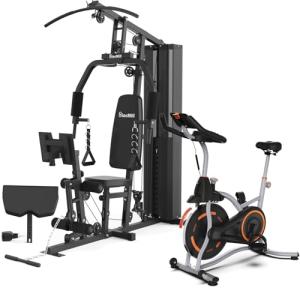
Adding a rower or fan bike gives you cardio without eating up too much real estate.
Full Home Gym System ($10,000+)
If budget and space aren't your limiting factors, this is where things get exciting. Premium power cage systems with fully integrated functional trainers, dedicated deadlift platforms, a full dumbbell rack, a quality treadmill or ski erg, and professional rubber flooring throughout create a training environment that rivals any commercial gym.
At this tier, pay attention to build quality — welded steel frames, sealed bearing cable systems, quiet cardio motors — because you're investing in equipment that should last decades.
Smart Features and Modern Add-Ons
The home gym space has seen a wave of technology integration in recent years. Touchscreen-equipped treadmills and rowers with live and on-demand class libraries have made it possible to get coached, motivated, and tracked from your own basement.
Smart tracking systems that count reps, monitor heart rate, and log workouts are increasingly built into equipment at multiple price points.
Mirrors and wall mounting systems have become popular for organizing smaller gear like bands, jump ropes, and foam rollers while making the space feel more open.
Even power racks have gotten smarter — some now include digital load cells in safety bars that track bar velocity and rep quality in real time, giving you powerlifting-grade feedback at home.
What to Buy First
If you're just getting started and feeling paralyzed by choice, here's the practical answer: buy a barbell, buy plates, and buy a rack.
Everything else is secondary. A barbell and a squat rack let you squat, deadlift, bench press, overhead press, and row — the foundational movements that build strength and change your body more than any machine ever will. Expand from there based on your specific goals.
Don't wait until you have the perfect space or the perfect budget. A half rack in a tight garage with basic flooring and a 300 lb barbell set is infinitely more useful than a dream gym that never gets built.
Maintenance and Longevity Tips
Home gym equipment is built to last — but only if you maintain it. A few habits make a big difference:
Keep your barbell lightly oiled with 3-in-1 oil to prevent rust and keep the spin smooth. Wipe down rubber flooring regularly; acidic sweat accelerates degradation over time. Check cable machine cables periodically for fraying — replace them at the first sign of wear, not after. Inspect rack bolts and collars before each heavy session.
Store equipment properly. Barbells should be stored vertically or horizontally on the rack — never leaning against a wall for extended periods. Bumper plates should be stored upright or flat in manageable stacks.
With proper care, a quality home gym system can serve you for 15–20 years or more, making it one of the highest-return investments in both fitness and finances you'll ever make.
Home gym systems exist on a wide spectrum — from a barbell and a few mats to a full multi-station setup with integrated technology. What unites the best ones is intentionality: equipment that fits your training style, your space, and your goals. Start with the fundamentals, buy quality where it counts, and build from there.