What Is a Smith Machine?
At its core, a Smith machine is a barbell fixed to a set of steel guide rails, allowing the bar to travel in a controlled, vertical (or slightly angled) path. The bar can be locked into place at multiple points along the track using rotating hooks that catch on safety stops built into the frame. That locking mechanism is really the whole point — it means you can load up serious weight, perform your set, and rack the bar safely without needing someone standing behind you ready to catch it.
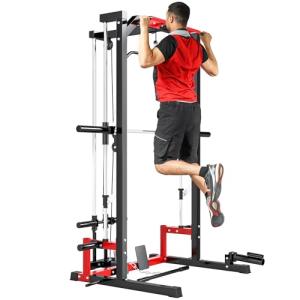
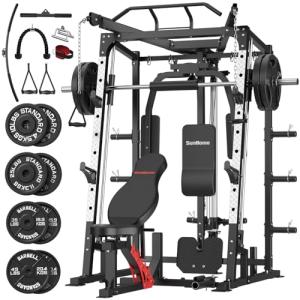
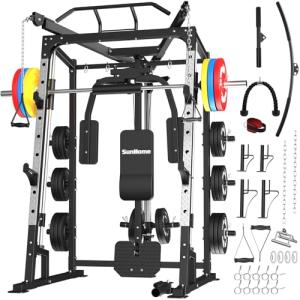
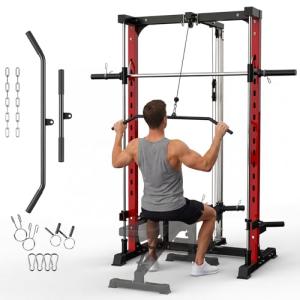
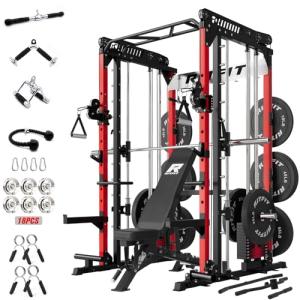
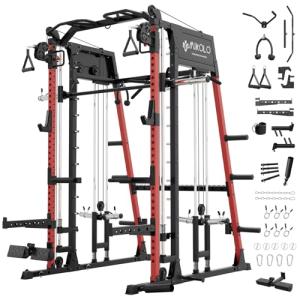
Modern Smith machines have evolved well beyond that simple description. Today's models often combine the Smith bar mechanism with cable systems, lat pulldown stations, functional trainers, pull-up bars, dip attachments, and even leg press platforms — all built into a single, self-contained unit. When you're setting up a home gym, that kind of multi-functionality can be a genuine game-changer.
Why Buy a Smith Machine?
Safety Without Compromise
The single biggest reason people choose a Smith machine over a traditional free-weight setup is safety during solo training. When you're benching alone and hit failure, a standard barbell can become a serious problem. A Smith machine takes that risk off the table entirely. The safety catches can be set to stop the bar before it ever reaches your chest, giving you a hard backstop on every rep. Same goes for squats — you can push to your limit knowing the bar won't go anywhere you don't want it to go.
This isn't just useful for beginners, either. Experienced lifters use Smith machines specifically because they want to train hard without relying on a spotter. Fatigue sets, drop sets, and pushing close to failure all become much more manageable when you have that mechanical insurance policy.
Control and Consistency
The guided bar path might be controversial in some lifting circles, but for specific training goals it's genuinely useful. When you're focused on developing a particular muscle group — isolating the chest during incline pressing, for example — removing the balance and stabilization demand of a free barbell lets you direct all your effort into the target muscle. It's the same principle behind machine-based training at commercial gyms, just applied to barbell movements.
The fixed path also makes it easier to train around injuries. If a shoulder issue makes unracked overhead pressing unpredictable and risky, a Smith machine can let you continue training the movement with far greater control over the exact bar path.
Versatility in a Single Frame
A well-equipped Smith machine replaces an enormous amount of gym real estate. A good all-in-one unit can cover squats, bench press, shoulder press, bent-over rows, hip thrusts, lunges, cable flyes, lat pulldowns, bicep curls, tricep pushdowns, rows, pull-ups, and more. For home gym owners working with a one-car garage or a spare room, that kind of functionality packed into a single footprint is hard to beat.
Smith Machine vs. Power Rack: Which One Do You Need?
This is probably the most common question people ask when they're setting up a home gym, and the honest answer is: it depends on what kind of lifter you are and what you're trying to accomplish.
Power racks give you complete freedom of movement. The bar path is unrestricted, which means your stabilizer muscles are fully engaged, your movement patterns are more natural, and the training stimulus more closely mimics real-world strength demands. For serious barbell athletes — powerlifters, Olympic weightlifters, CrossFitters — a power rack is usually the better call.
Smith machines offer controlled, guided movement with built-in safety. They tend to be better suited for muscle-building goals, body composition work, rehabilitation training, and for people who train alone and don't want to compromise on safety. The all-in-one designs also make them the smarter pick if you want a comprehensive training setup without buying multiple separate pieces of equipment.
Many home gym owners actually end up with both, but if you can only choose one, think carefully about your goals. If raw strength and athletic performance are the priority, lean toward a rack. If muscle development, safety, and training versatility matter most, the Smith machine has a strong case.
Types of Smith Machines
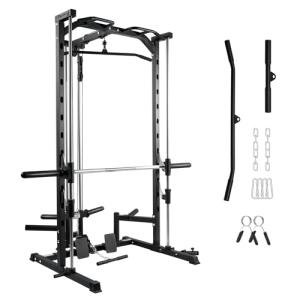
Basic Smith Machines
These are stripped-down units that include the guided bar and safety rack with little else. They're generally more affordable, take up less space, and do the job well if all you need is the core Smith machine functionality. Good entry points for lifters who already own other equipment like a cable machine or functional trainer and just need the guided barbell component.
Combo Smith Machine and Power Rack Units
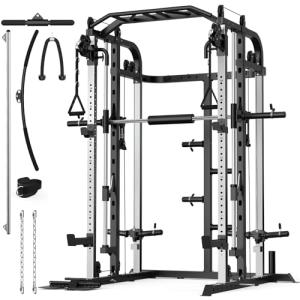
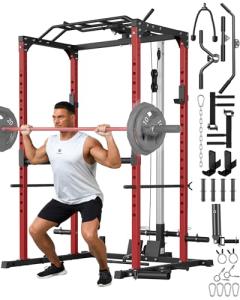
A popular middle-ground option — these integrate a Smith machine bar into a power rack frame, giving you both guided and free-weight barbell training in one structure. J-hooks and spotter arms allow you to use a standard Olympic barbell alongside the Smith mechanism, so you're not locked into one style of training.
All-in-One Smith Machine Home Gyms
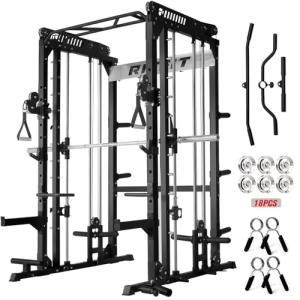
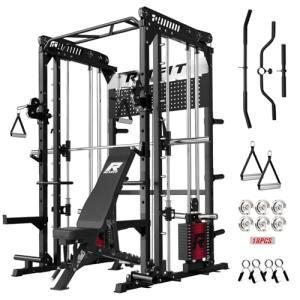
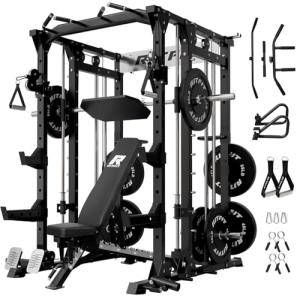
The most feature-rich category. These units combine the Smith machine with cable crossover systems, functional trainers, weight stacks or plate-loaded cable systems, pull-up bars, dip stations, and often a dozen or more dedicated training stations. Prices range considerably in this category — from around $1,000 on the budget end up to $5,000 or more for commercial-grade setups with selectorized weight stacks.
Key Features to Look For
Counterbalanced Bar
This is one of the most overlooked features, especially for newer lifters. A standard Smith machine barbell weighs roughly 15–25 lbs, but without counterbalancing, that weight can feel awkward at the bottom of a squat or during lighter sets. A counterbalanced bar effectively makes the bar feel nearly weightless until you add plates, giving you much more control at lower loads. If you plan to do any warming up, rehab work, or lighter accessory training, counterbalancing matters.
Vertical vs. Angled Rails
Traditional Smith machines run on a perfectly vertical bar path. More modern designs use a slight 3–7 degree angle meant to better mimic the natural arc of movements like the squat and bench press. Neither is strictly better — it comes down to personal preference and what movements you prioritize. Angled rails tend to feel more natural during lower-body exercises; vertical rails are generally simpler and still work well for most people.
Weight Capacity
Check the bar weight capacity before you buy, especially if you're a stronger or more advanced lifter. Budget machines might cap out at 300–400 lbs, while mid-range units typically handle 600 lbs or more. For most recreational lifters, 400 lbs is more than enough headroom, but there's no harm in buying something with a bit more capacity than you currently need.
Number and Spacing of Safety Catches
More catch positions means finer control over where the bar stops. For exercises like bench press and squat, you'll want to set the catches precisely, so a machine with catches spaced every two inches rather than every four is a noticeable upgrade in day-to-day usability.
Cable System and Pulley Quality
If you're buying an all-in-one unit with a cable system, pay attention to the pulley ratio and cable quality. A 2:1 pulley ratio means the cable stack feels half as heavy as the actual load — which can be a positive or a negative depending on your strength level. Look for nylon-coated aircraft cable, which is far more durable than standard options, and smooth-rolling pulleys that don't skip or bind under tension.
Build Quality and Frame Gauge
The gauge of steel matters a lot for long-term durability and how rigid the machine feels under load. Commercial machines are typically built from 11-gauge or heavier steel. Budget home gym units often use thinner gauge, which can result in flex and movement in the frame when you're pushing heavy loads. If the machine wobbles while you're squatting, you lose confidence in it fast.
Footprint and Ceiling Height
Measure your space carefully before ordering. Smith machines are not small — most require somewhere between 25 and 45 square feet of floor space. They're also tall, with most units standing between 82 and 92 inches. Standard 8-foot ceilings can be tight, especially if you're doing overhead pressing and need clearance above your head. Confirm ceiling height before committing to a tall unit.
Price Ranges: What to Expect
Under $1,000: Entry-level Smith machines with basic functionality. Good for straightforward squat and press work, but usually lack cable systems and have thinner steel construction. Fine as a starting point if budget is tight.
$1,000–$2,500: The sweet spot for most home gym owners. This range includes solid all-in-one designs with cable systems, multiple training stations, and genuinely durable frames. Most people building a serious home gym land here.
$2,500–$5,000+: Commercial-grade and premium all-in-one units with selectorized weight stacks, heavy-duty steel construction, dual cable systems, and a wide variety of training stations. Built to last a decade or more of serious daily use.
Who Is a Smith Machine Right For?
Smith machines genuinely serve a wide range of people. Home gym builders who want one machine to handle most of their training will find them compelling. Solo lifters who want to train heavy without a spotter will benefit directly from the safety features. Beginners who need the guided path to learn proper movement patterns will find them forgiving and accessible. Intermediate and advanced lifters looking to add training volume, isolate specific muscles, or train around injuries will find Smith machines a useful addition to their toolkit.
The one group that might find a Smith machine less useful is competitive barbell athletes — powerlifters, Olympic lifters, and anyone whose sport involves specific free-barbell technique. For those athletes, the majority of training should still be done with a free barbell in a rack. But even then, a Smith machine has its place in accessory and hypertrophy work.
The Smith machine debate has gone on for decades, and it probably won't end anytime soon. But for most people building a home gym, asking the simple question — does this help me train effectively, safely, and consistently? — the answer for a well-chosen Smith machine is yes.
Buy from a reputable brand, pick a build quality that matches your lifting level, and think clearly about whether you want a basic unit or an all-in-one setup. Do that, and a Smith machine will earn its place in your gym for years to come.