What Makes Rowing Such a Good Workout?
Before diving into the machines themselves, it's worth understanding why rowing has earned such a loyal following.
Rowing is one of the rare exercises that genuinely works your entire body in a single movement. Each stroke engages your legs (which do about 60% of the work), your core (which transfers the power), and your arms and back (which finish the pull). That's your quads, hamstrings, glutes, calves, abdominals, obliques, lower back, lats, rhomboids, biceps, and forearms — all in one fluid motion.
Compare that to cycling, which is almost entirely lower body, or running, which hammers your joints with every stride. Rowing is low-impact, which means your knees and hips aren't absorbing repeated shock. That makes it an excellent option for older adults, people recovering from injuries, or anyone who wants an intense cardio workout without the next-day joint soreness.
Calorie burn is another reason people gravitate toward rowing. A moderately paced 30-minute rowing session can burn anywhere from 250 to 400 calories depending on your body weight and effort level. Push it hard, and you can rival the calorie expenditure of running — without the pavement pounding.
The Four Main Types of Rowing Machines
Not all rowing machines are the same, and the type of resistance they use changes the feel of the workout significantly. Understanding these differences will help you zero in on the right machine for your space, budget, and training style.
Air Resistance Rowers
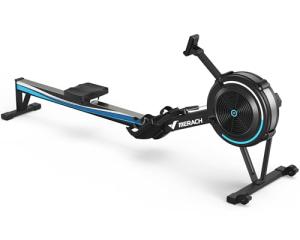
Air rowers use a flywheel fan to create resistance. The harder you pull, the more air the fan moves, and the more resistance you feel. This self-regulating system is beloved by serious athletes because the machine responds directly to your effort — there's no preset dial, just your own output driving the challenge.
The Concept2, which has been the gold standard in rowing machines for decades, uses air resistance. You'll find these in CrossFit boxes, rowing clubs, and elite training facilities worldwide. The feel is dynamic and engaging, and the performance data they produce is incredibly accurate. The main downsides are noise (the fan does produce a whooshing sound) and the fact that resistance can't be capped — great for athletes, but beginners can sometimes feel overwhelmed.
Magnetic Resistance Rowers
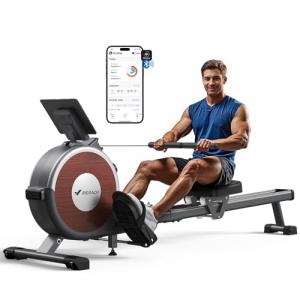
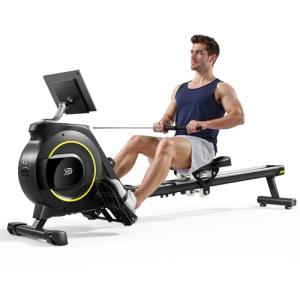
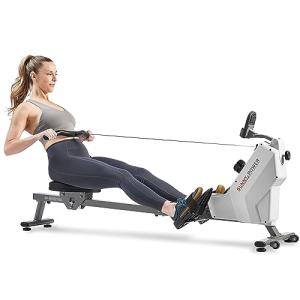
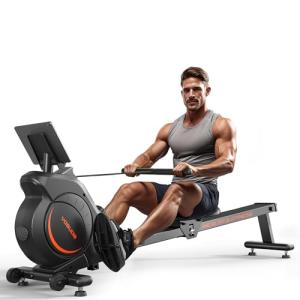
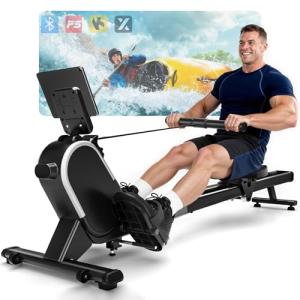
Magnetic rowers use magnets positioned near a flywheel to create resistance without any physical contact. That means virtually silent operation, which is a big deal if you're rowing at 6 a.m. in an apartment or a shared living space.
Resistance on magnetic rowers is adjusted manually or electronically through preset levels, typically ranging from 1 to 8 or 1 to 16 depending on the machine. The feel is smooth and consistent throughout the stroke, though some experienced rowers find it slightly less dynamic than air resistance. For home users who prioritize quiet operation and adjustable intensity, magnetic rowers are an excellent choice.
Water Resistance Rowers
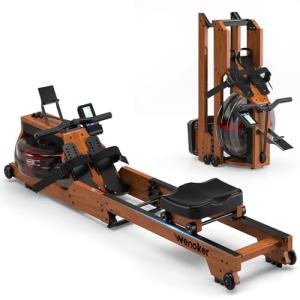
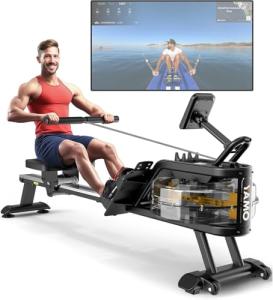
Water rowers use paddles submerged in a tank of water to generate resistance. The physics are nearly identical to rowing on an actual river — the harder you pull, the more drag the paddles create through the water. Many people find the feel and sound of water rowers deeply satisfying; there's a gentle, natural swooshing that's almost calming compared to the mechanical sounds of other resistance types.
Water rowers also tend to be beautiful objects. Many are crafted from hardwood and look more like furniture than gym equipment, which matters if your home gym doubles as a living space. They do require occasional water treatment to prevent algae growth, and the tanks add weight that makes moving them more of a project. But for the experience they deliver, many buyers feel it's worth every consideration.
Hydraulic Piston Rowers
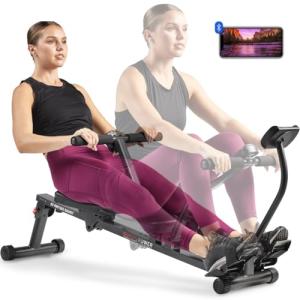
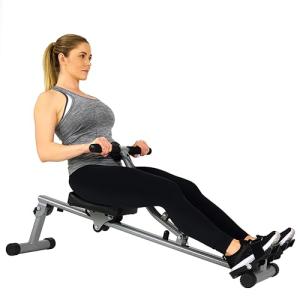
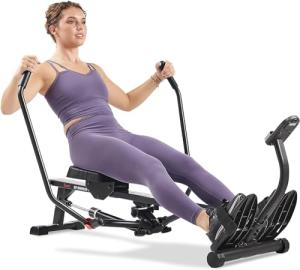
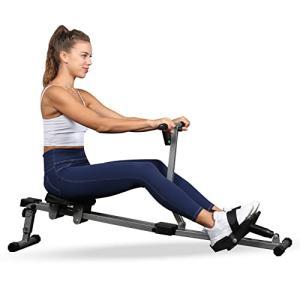
Hydraulic rowers use cylinders filled with fluid to create resistance, and they're almost always the most affordable option in the category. They tend to be compact and foldable, which makes them appealing for small spaces.
The honest truth is that hydraulic rowers don't offer the same smooth, realistic stroke as the other types. The mechanics can feel slightly jerky, and the range of motion is sometimes limited. They're a reasonable entry point for someone on a tight budget who wants to try rowing without committing to a premium machine, but most people who get serious about rowing eventually upgrade.
Key Features to Look For
Once you've settled on a resistance type, there are several other factors that separate a frustrating purchase from one you'll love for years.
Build Quality and Weight Capacity
Look at the frame material (steel is more durable than aluminum for heavy use), the smoothness of the seat rail, and the weight capacity. Most quality machines support between 250 and 350 pounds. If you're at the higher end of that range, don't ignore this spec — an underpowered frame will show wear quickly and may not be safe.
Seat and Handle Comfort
You're going to be sitting on this seat for 20, 30, maybe 45 minutes at a time. A seat that's comfortable and rolls smoothly makes a real difference in whether you actually use the machine. Handle grip matters too — an ergonomic, angled handle reduces wrist strain, especially during longer sessions. Some machines offer padded grips; others rely on contour alone. Try to sit on the machine if you can before buying.
Footrest Adjustability
Your feet do a lot of work during rowing, and a footrest that doesn't fit your shoe size properly will throw off your stroke mechanics. Look for footrests with wide adjustment ranges and secure strap systems. Some high-end machines offer pivoting footplates that move with your foot through the stroke, which significantly reduces ankle strain.
Monitor and Performance Tracking
A good performance monitor is more important than it sounds. Tracking your split time (time per 500 meters), strokes per minute, total meters, and calories helps you structure workouts, track progress, and stay motivated. Basic machines offer simple LCD displays; premium models offer full-color touchscreens with integrated streaming, fitness app connectivity, and even virtual racing against other users worldwide.
Whether you want a spartan readout or an immersive screen experience is a personal choice, but having at minimum a split-time display will genuinely change how you train.
Foldability and Storage
Rowing machines are long — typically between 96 and 110 inches when in use. If floor space is a concern, look for machines with a folding frame that can be stood upright against a wall. Most quality machines offer this, and the mechanism should be simple and stable. Check the footprint when stored, not just when in use.
Who Are Rowing Machines Best For?
Athletes and Cross-Trainers
If you're a runner, cyclist, or strength athlete looking to add cardio without extra joint stress, rowing is nearly perfect. It builds aerobic capacity and muscular endurance simultaneously, and it's genuinely hard to overtrain on a rower in the same way you might accumulate too many running miles.
Beginners Looking for Full-Body Fitness
Rowing has a bit of a learning curve — the sequencing of legs-core-arms on the drive, and arms-core-legs on the recovery, takes some practice. But once it clicks, it becomes intuitive fast. For beginners who want a single machine that covers cardio and light muscular conditioning without the complexity of a full gym setup, a rowing machine is one of the smartest investments available.
People with Joint Issues
Because rowing is seated and non-impact, it's often recommended for people with knee, hip, or back concerns (though anyone with existing back problems should consult a physiotherapist before rowing, as improper form can aggravate spinal issues). The smooth, controlled movement is forgiving compared to high-impact alternatives.
Anyone Short on Space
Compared to a treadmill or a cable machine, even a full-sized rowing machine has a relatively modest footprint, and foldable models take up surprisingly little wall space when stored. It's one of the more apartment-friendly pieces of serious fitness equipment.
How to Get the Most Out of Your Rower
Buying the machine is step one. Actually using it well is where the long-term value comes from.
Spend your first few sessions focusing purely on technique before worrying about intensity. The legs should initiate the drive — think of it as pushing away from a wall, not pulling with your arms. Your back stays tall and slightly reclined at the finish; it doesn't hunch forward at the catch. Your arms are the last thing to engage on the drive and the first to move on the recovery.
Once your form is solid, try interval training: 20 strokes at high intensity followed by 20 strokes at easy pace. Repeat for 20 minutes. It sounds simple and it is absolutely brutal in the best possible way. Structured programs, either built into your machine's monitor or through rowing apps like Ergatta, EXR, or the Concept2 logbook, will keep your training varied and progressive.
Aim for at least two to three sessions per week to see meaningful cardiovascular improvement. As your fitness builds, extend your steady-state sessions and push your interval intensity. Rowing rewards consistency.
Pricing: What to Expect at Each Level
Entry-level machines (typically hydraulic, occasionally basic magnetic) run from around $200 to $500. They're functional starting points but don't expect them to last a decade of heavy use.
Mid-range machines in the $600 to $1,200 range cover most quality magnetic and entry-level water rowers. This is where the build quality jump becomes noticeable, and most home users will be genuinely satisfied here.
Premium machines — Concept2 Model D, WaterRower Walnut, Ergatta, NordicTrack RW900 — sit between $1,000 and $2,500. These are built to last, feel exceptional to use, and often include advanced tracking or connected features. If you're serious about rowing, a machine in this range is a purchase you're unlikely to regret.
A rowing machine is one of the most complete pieces of fitness equipment you can own. It trains strength and cardio simultaneously, protects your joints, fits into most homes, and scales with your fitness from beginner to elite. The variety of resistance types, price points, and form factors means there's genuinely something for everyone — whether you want a silent magnetic rower for 5 a.m. workouts or a handcrafted walnut water rower that doubles as a statement piece in your living room.
Take the time to understand what type of resistance suits your needs, prioritize build quality over gimmicky features, and invest in a decent performance monitor. Do those things, and you'll have a machine you'll actually use — and that, more than anything else, is what makes it worth buying.