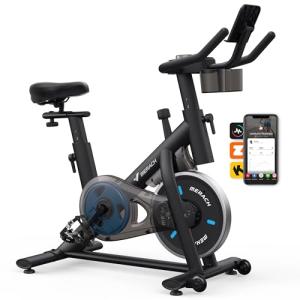
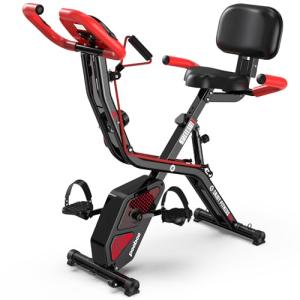
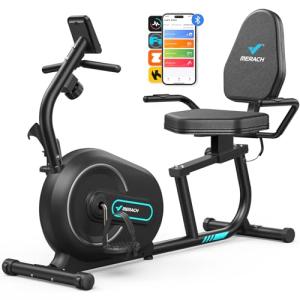
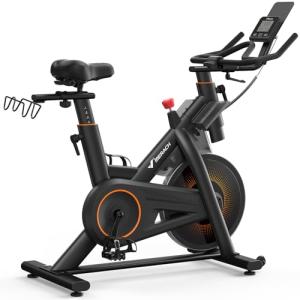
The Four Main Types of Exercise Bikes
Before you look at a single specification, you need to understand which type of bike is right for you. Getting this wrong is the most common and most expensive mistake shoppers make.
Upright Bikes
The upright bike is the classic. You sit directly over the pedals, just like you would on a regular road bicycle, with your back relatively straight and your hands resting on handlebars in front of you. It's a familiar, natural position that suits a wide range of riders.
Upright bikes tend to be among the most affordable options on the market, which makes them a great starting point for beginners or anyone who wants to dip their toes into home fitness without a major financial commitment. They're space-efficient, generally quiet, and simple to use. The trade-off is that the seats can feel uncomfortable during longer sessions, and the workout tends to be more moderate in intensity compared to other types. If your goal is steady cardio, weight management, or getting healthier at a comfortable pace while watching TV or listening to a podcast, an upright bike is an excellent match.
Indoor Cycling / Spin Bikes
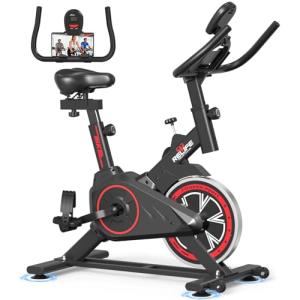
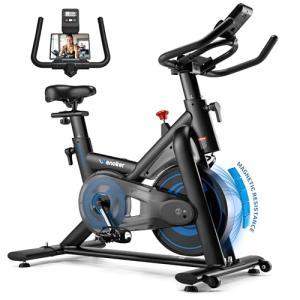
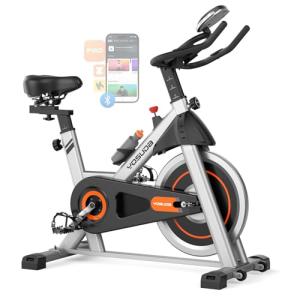
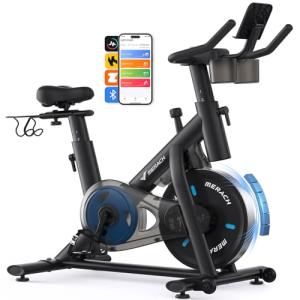
If you've ever taken a spin class at a gym, you already know what these feel like. Indoor cycling bikes — often called spin bikes — sit lower to the ground, have a heavier flywheel, and put you in a more aggressive, forward-leaning riding position that closely mimics the posture of an outdoor road cyclist.
These bikes are built for intensity. They handle high-resistance sprints, standing climbs, and interval training without flinching. The flywheel creates a smooth, momentum-driven pedal stroke that feels much more like real cycling than cheaper alternatives. Most have either friction resistance (a brake pad pressing directly on the wheel) or magnetic resistance (which is quieter and more precise). If you're serious about your fitness, training for an outdoor cycling event, or just love high-intensity workouts, a spin bike is probably your best option.
The one honest caveat: the riding position takes some getting used to, and the narrow saddle is genuinely uncomfortable for many people until you invest in padded shorts or a seat cover.
Recumbent Bikes
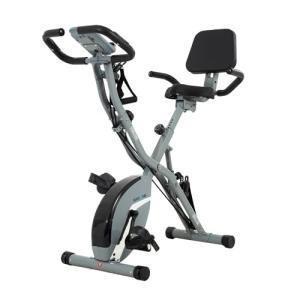
Recumbent bikes flip the script entirely. Instead of sitting upright, you recline into a bucket seat with a full backrest, with the pedals positioned out in front of you rather than underneath. It sounds almost too comfortable to be a real workout — but don't let appearances fool you.
Recumbent bikes deliver genuine cardiovascular benefits with far less stress on your joints, back, neck, and shoulders than any other type. They're particularly well-suited for older adults, people recovering from injury, or anyone dealing with chronic back or knee pain. The supported, reclined position means you can often sustain longer sessions without discomfort, which adds up to meaningful fitness gains over time.
The trade-off is that they take up more floor space and they generally don't allow for the kind of high-intensity, standing-climb style workouts that spin bikes do.
Air Bikes (Fan Bikes)
Air bikes are the outlier in this category — and in the best possible way if you love a challenge. Instead of a flywheel, they use a large fan as the resistance mechanism. The harder you pedal, the more resistance the fan creates. There's no ceiling to how hard you can work.
Most air bikes also include moving handlebars that push and pull with each pedal stroke, turning them into a full-body workout machine. They're a staple in CrossFit boxes and high-intensity training programs for good reason. They are, however, genuinely loud — the noise of the spinning fan is unavoidable — and they demand a lot from your body. If you're a serious athlete looking for maximum calorie burn and total-body conditioning, an air bike is extraordinary. If you want a gentle morning ride while your household sleeps, look elsewhere.
What Features Actually Matter
Once you've narrowed down the type, the real decision-making begins. Here's what deserves your attention — and what you can largely ignore.
Resistance System
This is arguably the most important mechanical feature of any exercise bike. Magnetic resistance systems are quieter, smoother, and more durable over time. They adjust electronically, which means you can change intensity mid-ride with a button press rather than reaching for a manual knob. Friction-based systems are cheaper but wear down over time and require occasional maintenance. For most people spending more than a few hundred dollars, magnetic resistance is worth seeking out.
Adjustability
A bike that doesn't fit your body is a bike that collects dust. Look for models that offer multi-directional adjustment for both the seat and handlebars — specifically, height adjustment and fore-aft (forward/backward) positioning. The wider the range of adjustment, the more likely it is that multiple people in your household can use the same bike comfortably. If you're particularly tall, short, or buying for a family, this deserves serious attention.
The Display and Metrics
Even a basic exercise bike should show you the essentials: time elapsed, distance, speed (or RPM/cadence), resistance level, and an estimated calorie burn. A critical detail that many buyers overlook: the display must show the current resistance level as a number. Without this, you have no way to replicate a workout you loved, which makes tracking progress over time nearly impossible.
Connected bikes add a screen — sometimes enormous, 15 to 24 inches — that streams live and on-demand classes, tracks your performance across sessions, and often integrates with popular fitness apps like Zwift, Strava, or TrainerRoad. These features genuinely enhance motivation for many people. Just go in knowing that most connected platforms require an ongoing monthly subscription fee on top of the purchase price.
Build Quality and Stability
A wobbly bike is both annoying and potentially dangerous. Weight capacity is a useful proxy for overall build quality — a bike rated to a higher maximum user weight is generally made from heavier-gauge steel and more robust components. Look for a solid, wide base that won't rock or shift during hard efforts. If you can, try a bike in person before buying; you'll know within about 30 seconds whether it feels sturdy or flimsy.
Noise Level
This matters more than most people anticipate. A loud bike limits when you can exercise, especially if you have partners, children, or neighbors to consider. Belt-drive systems are significantly quieter than chain-drive. Magnetic resistance is quieter than friction-based. Air bikes are the loudest type by nature, though they're still perfectly manageable with music or headphones. If noise is a concern for your living situation, specifically seek out bikes marketed as quiet or belt-driven.
Pedals and Footwear
Many bikes ship with hybrid pedals that accommodate both standard athletic shoes (held in place by toe cages) and clip-in cycling shoes with SPD cleats. Clipping in allows you to generate power on both the downstroke and the upstroke, making your workout more efficient. If you already own cycling shoes, check pedal compatibility before you buy. If you're new to this, hybrid pedals are a great starting point.
How Much Should You Spend?
Here's a realistic breakdown of what different price tiers actually get you.
Under $400 gets you a functional, basic spin or upright bike with manual resistance and a simple display. Build quality is serviceable but not exceptional. For casual use a few times a week, these bikes get the job done. Don't expect them to last a decade of daily hard riding.
$400–$900 is where quality takes a noticeable jump. You'll find solid magnetic resistance, better adjustability, quieter operation, and sturdier frames. This is the sweet spot for most regular users who want a reliable machine without premium-tier pricing.
$900–$1,500 brings you into semi-commercial territory — excellent build quality, smooth resistance systems, and often a basic connected screen or Bluetooth integration for fitness apps.
$1,500 and above is the territory of fully connected bikes from brands like Peloton, NordicTrack, and Echelon. These machines come with large touchscreens, sophisticated performance tracking, and access to vast libraries of instructor-led classes. They're genuinely motivating for the right person. But factor in the ongoing subscription costs — typically $30 to $45 per month — and make sure you'll actually use the connected features before paying the premium.
Smart Connectivity: Worth It or Overhyped?
Connected bikes have genuinely changed the indoor cycling experience for a lot of people. Having a charismatic instructor push you through a 45-minute class is far more motivating than staring at a white wall while watching numbers tick up on a basic display. App ecosystems like iFIT, the Peloton platform, and Echelon's library offer thousands of classes across every style and intensity level.
But connected features aren't for everyone, and they come with real considerations. The subscription costs add up over months and years. The technology — apps, firmware, business models — can change over time. And some riders simply prefer the quiet, meditative experience of unguided cycling. If you're the kind of person who already pays for streaming fitness services and actually uses them, a connected bike is a natural fit. If you're not, you may be paying for a feature you'll stop using within three months.
Key Things to Check Before You Buy
There are a handful of practical details that rarely make it into product descriptions but make a big difference in everyday use. Check the assembled dimensions carefully against your available space, keeping in mind that you'll need room not just for the bike itself but for comfortable movement around it. Verify the maximum user weight to ensure it accommodates everyone who'll use the machine.
Look into the warranty terms — a good bike should come with a multi-year frame warranty and at least a year of coverage on parts and labor. Check whether the manufacturer offers in-home assembly or white-glove delivery, especially for heavier models. And if possible, read verified owner reviews specifically for notes about long-term durability and customer service experiences, since these reveal things that short-term professional tests don't.
An exercise bike is one of the few home fitness purchases that genuinely stands the test of time. It's low-impact enough to use year-round regardless of injury or age. It's effective for cardiovascular health, weight management, and lower-body conditioning. And unlike treadmills or rowing machines, it's accessible to nearly everyone regardless of fitness level.
The key is choosing the right type for your body and your goals, prioritizing the features that will actually change your daily experience, and buying as much quality as your budget allows without getting dazzled by tech features you won't use. Get those fundamentals right, and your exercise bike won't just sit in the corner — it'll earn its floor space every single week.