The Problem With Most Home Gyms (And Why This One Tries to Fix It)
Walk into the fitness equipment section of any big-box store or scroll through Amazon long enough and you'll notice a pattern: equipment that promises everything delivers, at best, a handful of decent exercises and takes up half your living room in the process. A pull-up bar here. A cable machine there. A flat bench you keep tripping over. A set of dumbbells that range from "too light to be useful" to "heavy enough to be a health hazard if dropped."
The average home fitness enthusiast doesn't have 500 square feet of dedicated gym space. They have a corner of a basement, a portion of a garage, or — if they're really working with tight constraints — a section of a bedroom. They need equipment that's honest about what it does, takes up a reasonable amount of floor space, and won't fall apart after six months of regular use.
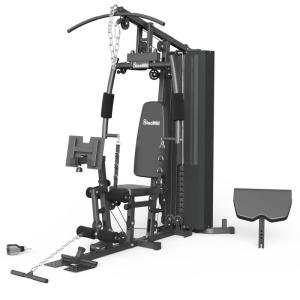
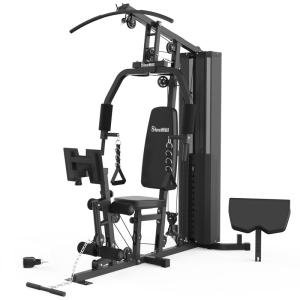
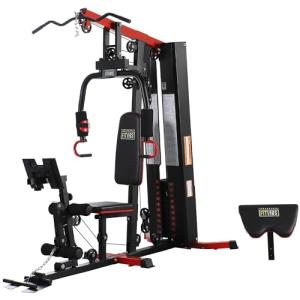
That's the gap Fitvids has been trying to fill since the brand launched in 2020. Their All-in-One Home Gym Equipment System is one of their flagship offerings, and on paper, the specs are genuinely compelling. Heavy-duty steel construction with 1.5-inch thick tubing, a maximum user weight capacity of 500 lbs, nylon-coated industrial-grade cables tested to 1,000 pounds, and a high and low pulley system featuring 15 pulleys that collectively target around 80% of the body's major muscle groups.
Whether those numbers hold up in the real world is a different conversation — and one we're going to have in full.
What You're Actually Getting: A Deep Look at the Hardware
Frame Construction
The frame is constructed from heavy-duty steel, providing a reassuring sturdiness that can handle intense strength training sessions. The powder-coated finish resists scratches and sweat corrosion, which is essential for long-term durability.
This matters more than people often realize. In a home environment, equipment lives through temperature swings, humidity changes, accidental bumps, and the occasional spilled water bottle. A powder coat finish isn't just cosmetic — it's the first line of defense against the rust and corrosion that will eventually kill an untreated steel frame.
The 1.5-inch steel tubing used throughout the frame is the same gauge you'd find on mid-tier commercial equipment. It's not what you'd see bolted to the floor at a serious powerlifting gym, but for a home setting where you're not running continuous 12-hour sessions under hundreds of pounds of load, it's more than adequate.
The Pulley System
With 15 pulleys providing smooth, fluid motion, the system offers unprecedented freedom to target and strengthen various muscle groups. This system is particularly effective for developing your back, arms, and core muscles with every repetition.
The high/low pulley configuration is what separates this from a glorified cable crossover machine. Having both a high anchor point and a low anchor point means you can simulate the full range of pulling and pressing angles a commercial cable station offers — lat pulldowns from above, seated rows from below, chest flies, face pulls, tricep pushdowns, and cable curls all become accessible without any reconfiguration beyond swapping attachment points.
The pulley system is smooth and operates quietly, an important feature if you live in an apartment or have family members nearby. This quiet operation is driven by steel shaft pulleys rather than cheaper plastic alternatives, which eliminates the squeaking and grinding noise that plagues budget cable systems.
Weight Stack
The 160 lb vinyl weight stack and 15-pulley setup provide consistent resistance and easy progression for all fitness levels. The selector pin system means you change resistance in seconds — no loading plates, no struggling with clips and collars, no plates dropped on toes. You pull the pin, slide it into the appropriate slot, and you're ready to go.
For most intermediate lifters, 160 lbs of stack resistance is sufficient for upper body work. The cable-and-pulley ratio can sometimes effectively increase the felt resistance depending on the configuration, so you may actually be working against more load than the raw number suggests. For very advanced lifters with established strength baselines, this could be a ceiling you bump into eventually — but that's a bridge most home gym users won't need to cross for quite some time.
Included Accessories and Attachments
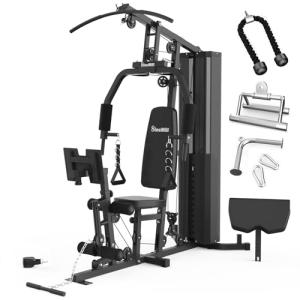
Comfort and versatility come standard with a soft seat cushion, preacher curl station, detachable ankle straps, sponge handles, and calf blocks. The rod is removable to swap in your favorite accessories, making customization simple without extra machines.
The inclusion of a preacher curl station is a detail worth highlighting. Preacher curls — where the upper arm is braced against a pad to isolate the bicep — are typically only available on dedicated curl machines or separate preacher benches. Having it integrated into the system means your bicep training doesn't require a separate piece of furniture.
Ankle straps extend the lower body utility considerably. With those attached to the low pulley, you can perform cable kickbacks, hip abduction work, straight-leg deadlifts from the cable, and various leg curl variations. It doesn't replace a dedicated leg press or leg curl machine, but it covers considerably more ground than a machine without them.
Dimensions and Space Requirements
Designed for full-body training, this compact unit measures 42 inches wide by 68 inches deep by 78 inches tall.
To put that in perspective: you're looking at roughly 3.5 feet by 5.7 feet of floor space. That's smaller than a queen-sized bed. For anyone setting up in a spare bedroom, basement corner, or half of a two-car garage, this machine genuinely fits. The 78-inch height does require standard ceiling clearance — if your basement ceiling is on the lower end, measure before you buy.
Despite its impressive capabilities, this equipment can fit comfortably in almost any space — whether you're setting it up in a basement, garage, or apartment. That space efficiency is one of the machine's strongest practical selling points. Compare it to purchasing a squat rack, cable station, and lat pulldown machine separately — you'd easily need three to four times the floor space and spend considerably more money.
The Workout Range: What You Can Actually Do
One of the most persistent marketing sins in the home gym equipment industry is inflating the exercise count. A company will claim their equipment supports "100+ exercises" and then list things like "left arm bicep curl" and "right arm bicep curl" as two separate exercises to pad the number. Let's be more honest about what this system genuinely enables.
Upper Body (Pulling): Lat pulldowns, seated cable rows, face pulls, cable bicep curls, preacher curls, single-arm rows, high-cable rows. These form the backbone of back and bicep development and the Fitvids system handles all of them comfortably.
Upper Body (Pushing): Cable chest flies, cable crossovers, tricep pushdowns, overhead tricep extensions, cable shoulder press variations. The cable-based chest and shoulder movements are particularly valuable because cables maintain constant tension throughout the range of motion in a way that free weights don't.
Core: Cable crunches, woodchops, pallof press variations, rotational core work. The ability to anchor resistance at different heights makes cable-based core training both effective and joint-friendly.
Lower Body: Leg press (on models with the integrated leg press), cable kickbacks, hip extensions, leg curls using ankle straps, calf raises. The 160 lbs weight stack and integrated leg press means the machine covers over 80% of muscle groups without overwhelming your space.
The honest summary: this machine handles upper body work exceptionally well, provides solid core options, and covers basic lower body work adequately. If you're a serious squatter or deadlifter who programs heavy barbell work as the center of your training, you'll want to pair this with a power rack or add a barbell setup. For everyone else — fitness beginners through dedicated intermediate lifters — this machine covers enough ground to build a genuinely complete training program.
Assembly: The Part Nobody Talks About Honestly
Here's where we owe you a straight answer. Assembly can be time-consuming and may require two people. That's the polished version. The unpolished version is that this machine arrives in five separate boxes, involves threading cables through a 15-pulley system, and requires careful attention to bolt sequence and cable routing.
It is recommended to have at least two people for assembly. Ensure you have sufficient space before beginning. Unpack all components and verify against the parts list before assembling.
The good news is that Fitvids has invested meaningfully in their installation support. Assembly video guides are provided and users consistently report that the videos are clearer than the written instructions. Plan for three to four hours for your first assembly, have a second person available, and watch the video guides rather than trying to work exclusively from the paper manual.
One practical tip that experienced owners recommend: wait until all five boxes have arrived before starting assembly. Missing a component mid-build because a box is delayed adds significant frustration to what's already a multi-hour process.
Real User Experiences: The Full Picture
As someone who works long hours and finds it hard to make it to the gym, this machine has been an absolute game changer for a fitness routine. It combines so many features — cable station, squat rack, lat pulldown machine — into one space-saving footprint.
The pulley system uses commercial-grade cables and bearings that make every movement feel effortless. The 160 lbs weight stack is more than enough for most intermediate lifters, and having the leg press built right in means no separate equipment is needed for lower body days.
On the more critical side, some users note that the seat height and pad geometry can feel cramped for taller individuals. The machine's compact footprint, while a selling point for space efficiency, does mean it's sized for average height users. If you're over 6'2", the seated rowing position in particular may feel less ergonomically ideal. Reading user reviews filtered by your height range before purchasing is a smart move.
The issue of height accommodation shows up consistently enough to be worth taking seriously. The machine performs admirably for users in the 5'4" to 6'0" range. Outside those bounds — especially on the taller end — experience varies.
Fitvids vs. the Competition: How It Stacks Up
The all-in-one home gym market has gotten genuinely competitive over the past few years. Here's how the Fitvids system compares to its closest rivals:
| Feature | Fitvids All-in-One | Marcy Smith Machine | Bowflex Xtreme 2 SE | Mikolo M1 Home Gym | JELENS H11 Home Gym |
|---|---|---|---|---|---|
| Weight Stack | 160 lbs | Free weight (plates not included) | Up to 210 lbs resistance rods | 150 lbs | 150 lbs |
| Frame Material | 1.5" steel tubing | Heavy-gauge steel | Steel frame | Steel | Steel |
| Total Weight Capacity | 1,000 lbs | 600–800 lbs | 410 lbs | 1,000 lbs | 1,000 lbs |
| User Weight Capacity | 500 lbs | 300 lbs | 300 lbs | 375 lbs | 375 lbs |
| Pulley Count | 15 | N/A (Smith track) | 7 | 11 | 12 |
| Leg Press Included | Yes (on LX770) | No | No | Yes | Yes |
| Preacher Curl Station | Yes | No | No | No | No |
| Footprint | 42" x 68" | 84" x 46" (larger) | 54" x 49" | 42" x 68" | 43" x 70" |
| Assembly Difficulty | Moderate–High | High | Moderate | Moderate | Moderate |
| Best For | Intermediate home lifters | Serious strength athletes | Beginners–Intermediate | Budget buyers | Budget buyers |
| Amazon Link | View on Amazon | Separate listing | Separate listing | Separate listing | Separate listing |
The Marcy Smith Machine is an entirely different category of equipment — aimed at barbell lifters who want guided bar path and free weight progression. It's a legitimate option for a different type of user. The Bowflex Xtreme 2 SE uses resistance rods rather than a weight stack, which some users prefer for feel and others find limiting. The Mikolo and JELENS machines are direct Fitvids competitors offering similar specs, and the differences between them largely come down to build quality nuances and price point at the time of purchase.
Where Fitvids distinguishes itself against the direct competitors is the preacher curl station, the higher weight stack ceiling (on the LX770 specifically), and the build reputation that has been established over several years of reviews across Amazon and independent fitness sites.
Who This Machine Is Right For
There's no single piece of fitness equipment that's right for everyone — but the Fitvids All-in-One Home Gym System has a clear sweet spot.
It's the right machine for you if:
You're training at an intermediate level and want to build muscle, improve conditioning, and hit most major movement patterns without maintaining a gym membership. You have a dedicated space of at least 42 by 70 inches that can handle the machine's footprint. You do most of your training alone and prefer the safety and convenience of a weight stack machine over free weights. You want to do the majority of your upper body training on cables, which is increasingly supported as an effective method for hypertrophy due to constant tension.
It may not be the right machine for you if:
You're a competitive powerlifter or serious barbell athlete whose training centers on squats, deadlifts, and bench press. You're a very tall individual — above 6'3" — and ergonomic fit is a priority. You're looking for pure cardio equipment. And you'll want to do your research carefully if the assembly process concerns you — this is genuinely a multi-hour project that benefits from a helper.
Value Assessment: Membership Cost vs. Equipment Investment
The financial math on home gym equipment versus gym membership is one worth doing explicitly. A mid-tier gym membership in the United States runs roughly $40–$70 per month. Over three years, that's $1,440 to $2,520 in membership fees — and that's without considering gas, time spent commuting, and the hidden cost of workouts skipped because of scheduling friction.
The Fitvids All-in-One system is a one-time purchase. There are no monthly fees, no parking, no waiting for machines during peak hours, and no commute that eats 20 minutes on each end of your workout. For someone who trains consistently three to five times per week, the break-even point against a gym membership arrives faster than most people expect — typically within 18 to 30 months for mid-range memberships.
Beyond the economics, there's a behavioral argument for home gym ownership that often goes undiscussed: the machine being there, always available, removes the single largest barrier to consistent training — friction. When the gym is a 12-minute drive away, a Tuesday night workout after a long workday is genuinely optional. When the gym is your basement, the only decision is whether to change your shoes.