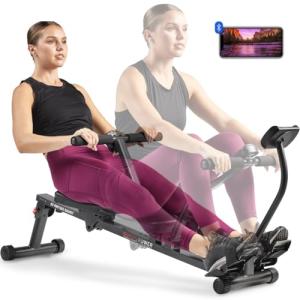
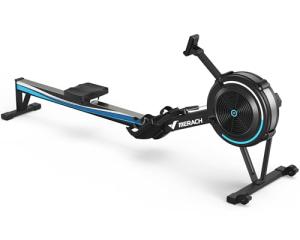
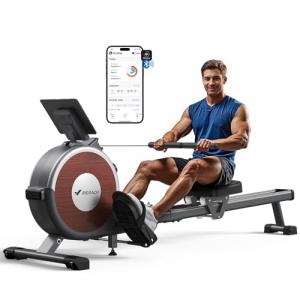
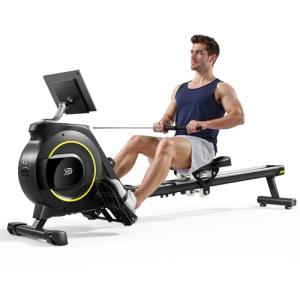
Who Is MERACH, and Why Should You Care?
MERACH is a fitness brand that has quietly built a loyal following among budget-conscious home gym enthusiasts. The company manufactures a range of cardio equipment — exercise bikes, ellipticals, treadmills — but their rowing machines have become the standout product line.
What sets MERACH apart from the flood of anonymous fitness brands on Amazon is their ecosystem approach. They don't just sell hardware. They pair their machines with a free proprietary app (the MERACH App), offer compatibility with KINOMAP for virtual rowing experiences, and provide Bluetooth connectivity across their product line. That's a level of integration you'd typically expect from premium brands charging two or three times as much.
The Q1S model sits at the accessible end of their rowing lineup. It's designed specifically for home users who want effective full-body workouts without the complexity, noise, or expense of commercial-grade equipment.
What You Get in the Box: First Impressions Matter
The MERACH Q1S arrives partially pre-assembled, which is a welcome relief for anyone who has spent an entire Saturday afternoon wrestling with cryptic instruction manuals and mystery hardware bags. Most users report completing the full assembly in 20 to 30 minutes, and several note that the included tools and labeled hardware make the process straightforward.
The machine itself weighs approximately 56 pounds and measures 65 inches long by 19.3 inches wide by 24.8 inches tall. That's compact enough to fit comfortably in a spare bedroom, a living room corner, or a small apartment. And when you're not using it, the Q1S stores vertically thanks to built-in rubber feet on the front housing. The recommended storage footprint is just 1.6 by 2.1 feet — barely larger than a doormat.
One notable inclusion that separates this particular listing from many competitors is the bundled seat cushion. Extended rowing sessions can be tough on anyone's backside, and the added cushion addresses one of the most common complaints about budget rowers before you even start your first workout.
The Dual Slide Rail System: Stability Where It Counts
Single-rail rowing machines have a well-documented problem: lateral wobble. When you're pulling hard at higher resistance levels, the seat can shift side to side, breaking your form and creating an unstable, sometimes unsettling rowing experience. For heavier users, this becomes a dealbreaker.
The MERACH Q1S addresses this with a dual slide rail design built from aluminum alloy. Two parallel rails guide the seat along its track, supported by six sets of guide wheels underneath. The result is a noticeably smoother, more stable stroke compared to single-rail machines in the same price range.
Rubber bumpers on both ends of the track protect the frame from impact during aggressive rowing. The overall build combines steel, aluminum alloy, and carbon fiber reinforcement at the head unit, creating a frame that feels significantly more robust than its weight would suggest.
The 350-pound maximum weight capacity is competitive with rowers costing two to three times as much. For context, many budget rowers cap out at 250 or 300 pounds, limiting their usefulness for a significant portion of the population.
16 Levels of Magnetic Resistance: Quiet Power
Resistance type is one of the most important decisions in choosing a rowing machine. The four main types — air, water, hydraulic, and magnetic — each offer distinct advantages and trade-offs. Air rowers scale resistance dynamically with your effort but produce noticeable noise. Water rowers provide a beautiful, natural rowing feel but require maintenance and take up more space. Hydraulic rowers are compact but often feel unnatural.
Magnetic resistance, the system used in the MERACH Q1S, hits a specific sweet spot for home users. The resistance is generated by magnets interacting with a flywheel, which means there's no friction, no wind noise, and virtually no sound. Multiple reviewers describe the Q1S as whispering quiet — a critical feature for early-morning exercisers, apartment dwellers, or anyone sharing living space with light sleepers.
The Q1S offers 16 distinct resistance levels controlled by a chunky, rubberized adjustment dial. That dial is thoughtfully designed to be easy to grip and turn with sweaty hands mid-workout. Levels 1 through 7 provide gentle warmup and recovery resistance. Levels 8 through 12 cover solid aerobic training territory. And levels 13 through 16 push into genuine strength-building difficulty that will challenge experienced rowers.
Is the resistance as heavy as what you'd find on a commercial Concept2 RowErg? No. The peak resistance on the Q1S measures approximately 35 kilograms, which is respectable but won't satisfy competitive rowers or serious athletes training for specific performance benchmarks. For everyone else — fitness enthusiasts, people focused on weight loss, cross-trainers, rehab patients, and general health seekers — it's more than enough to deliver effective workouts for years.
The App Ecosystem: Free Training That Actually Works
One of the strongest selling points of the MERACH Q1S is its software ecosystem, and the fact that you don't need a monthly subscription to use it.
The MERACH App connects via Bluetooth and provides access to free trainer-led workout courses, scenic virtual rowing routes, and personalized fitness plans. It tracks distance, time, calories burned, speed, strokes per minute, and more. For users who thrive on guided workouts and progress tracking, the app transforms a simple rowing machine into something closer to an interactive fitness platform.
The Q1S is also compatible with KINOMAP, a popular third-party fitness app that offers virtual rowing experiences through real-world video routes. KINOMAP does require a subscription for full access, but the MERACH App alone provides plenty of content to keep most users engaged.
The built-in LCD display on the machine itself tracks basic metrics — time, distance, calories, stroke count, and total stroke count — without needing a phone or tablet. It runs on batteries and activates automatically when you start rowing, so there's zero setup friction for quick sessions.
For users who want the auto-resistance adjustment feature (where the app automatically changes resistance levels during guided workouts), the electromagnetic version of the Q1S supports this. The standard magnetic version requires manual resistance adjustment, which is still perfectly functional but slightly less seamless.
Comfort and Ergonomics: The Details That Keep You Coming Back
A rowing machine is only as good as how it feels during minute 20 of a hard interval session. And this is where many budget rowers fall apart — literally and figuratively.
The MERACH Q1S gets several ergonomic details right. The seat sits 320 millimeters (about 12.6 inches) off the ground, which is low enough for easy step-over access but high enough to avoid that uncomfortable squatting-on-the-floor feeling of some compact rowers. The seat itself is molded PU foam with an ergonomic shape, and the bundled cushion adds an extra layer of comfort for longer sessions.
The foot pedals are adjustable and feature non-slip surfaces to keep your feet secure during powerful drive phases. The rubberized handle provides a comfortable, secure grip and connects to the flywheel via a durable nylon strap. After a month of regular use, testers report no visible wear on the strap or handle — a good sign for long-term durability.
The machine accommodates users up to 6 feet 7 inches tall, which puts it ahead of many budget competitors that max out around 6 feet 2 inches. If you're tall and have struggled to find a rower with adequate rail length, the Q1S deserves serious consideration.
A built-in device holder sits above the flywheel housing, providing a convenient spot for a tablet or phone. The holder has a rubberized surface and a lip to keep your device secure. It's nothing fancy, but it works — and having your screen at eye level makes app-guided workouts far more enjoyable than propping a phone on the floor.
How the MERACH Q1S Stacks Up Against the Competition
No product exists in a vacuum. The home rowing machine market includes options from dirt cheap to eye-wateringly expensive, and the MERACH Q1S occupies an interesting middle-ground position: budget price, mid-range features. Here's how it compares to three popular alternatives.
| Feature | MERACH Q1S | Sunny Health SF-RW5515 | Concept2 RowErg | Hydrow Wave |
|---|---|---|---|---|
| Price Range | ~$190–$250 | ~$150–$200 | ~$990–$1,050 | ~$1,495+ |
| Resistance Type | Magnetic (16 levels) | Magnetic (8 levels) | Air (variable) | Electromagnetic |
| Max Weight Capacity | 350 lbs | 250 lbs | 500 lbs | 375 lbs |
| Rail System | Dual slide rail | Single rail | Single rail (aluminum) | Single rail |
| Noise Level | Very quiet | Quiet | Moderate to loud | Very quiet |
| App Integration | MERACH App (free) + KINOMAP | No native app | ErgData (free) + community | Hydrow App (subscription) |
| Display | LCD + app dashboard | Basic LCD | PM5 performance monitor | 16" HD touchscreen |
| Seat Cushion Included | Yes | No | No | No |
| Foldable/Upright Storage | Upright storage | No | Upright with wall hanger | Upright with kit |
| User Height Limit | Up to 6'7" | Up to 6'2" | Up to 6'6"+ | Up to 6'5" |
| Assembly Time | ~20–30 minutes | ~30–45 minutes | ~20–30 minutes | ~25 minutes |
| Warranty | 1 year (extendable to 2) | 3 years frame | 5 years frame | 5 years frame |
| Best For | Budget-conscious home users | Ultra-tight budgets | Serious athletes/competitors | Premium coached experience |
The comparison reveals the MERACH Q1S's strategic positioning clearly. It offers roughly double the resistance levels of the Sunny Health model, significantly higher weight capacity, and app integration that the cheaper machine simply doesn't match. Against the Concept2, it obviously can't compete on raw performance or durability — but it also costs about 75% to 80% less. And compared to the Hydrow, it delivers a functional rowing experience without requiring a $44/month subscription on top of the hardware cost.
For most home users who want consistent, quiet cardio without breaking the bank, the Q1S occupies a remarkably efficient value position.
Real-World Performance: What Actual Users Are Saying
User feedback across multiple retail platforms paints a consistent picture. The overwhelming majority of reviewers highlight three things: the quiet operation, the smooth rowing motion, and the ease of assembly.
Several users specifically mention using the Q1S for early-morning or late-night workouts without waking family members or disturbing neighbors in adjacent apartments. The magnetic flywheel lives up to its quiet billing, and the dual rail system keeps seat noise to a minimum.
First-time rowers consistently praise the machine's accessibility. The learning curve is gentle, the resistance ramp is gradual, and the app provides enough guidance to help beginners develop proper form without feeling overwhelmed.
There are some common criticisms worth noting. A handful of users report that the LCD display is basic compared to higher-end machines. Others wish for more built-in workout programs on the console itself, rather than relying on a phone app. And a few heavier users have noted that very aggressive rowing at the highest resistance levels can cause some strain on the seat mechanism over time.
These are real considerations, but they're also consistent with the expectations of a machine in this price range. No $200 rower is going to match the fit and finish of a $1,000 machine. The question is whether the trade-offs are reasonable — and for the Q1S, they overwhelmingly are.
The Full-Body Workout Factor: Why Rowing Deserves Your Attention
If you've been on the fence about rowing as a primary form of exercise, here's the case for taking the plunge.
Rowing engages over 80% of the body's major muscle groups in a single movement. Each stroke works the legs (quadriceps, hamstrings, glutes), the core (abdominals, obliques, lower back), and the upper body (lats, rhomboids, biceps, forearms, shoulders). Very few exercises provide this kind of comprehensive muscular engagement, and even fewer do it with virtually zero impact on the joints.
For calorie burning, rowing is remarkably efficient. A moderate 30-minute session can burn between 250 and 350 calories depending on body weight and intensity. High-intensity interval training (HIIT) on a rower can push those numbers significantly higher while improving cardiovascular capacity and metabolic function.
Rowing is also one of the most recommended exercise modalities for people recovering from joint injuries, managing arthritis, or dealing with the mobility limitations that come with age. The seated position eliminates impact forces, and the smooth, controlled motion puts far less stress on knees, hips, and ankles than running, jumping, or even cycling.
The MERACH Q1S, with its 16 resistance levels and guided app workouts, makes it easy to structure rowing sessions for any goal — weight loss, endurance building, strength development, or active recovery.
Maintenance and Longevity: Keeping Your Investment Working
One of the significant advantages of magnetic resistance rowers over water or air models is their minimal maintenance requirements. There's no water to refill or treat, no air filter to clean, and no chain to lubricate. The magnetic flywheel is a sealed system that requires essentially zero ongoing maintenance.
The main care tasks for the Q1S are simple: wipe down the rails and seat after sweaty sessions, check that bolts remain tight every few months, and keep the area around the machine clear of debris that could interfere with the rail system. That's it.
MERACH backs the Q1S with a one-year manufacturer warranty, extendable to two years through their registration program. While that's shorter than the warranties offered by premium brands like Concept2 (five years on the frame), it's standard for this price category and provides reasonable peace of mind for the purchase.
Should You Buy the MERACH Q1S?
The MERACH Rowing Machine Q1S is not a perfect machine. It's not trying to be. It's not going to replace a Concept2 in a CrossFit box, and it won't deliver the cinematic guided-rowing experience of a Hydrow.
What it will do is provide a genuinely effective, remarkably quiet, well-built rowing workout for a fraction of what most competitors charge. The dual slide rail system adds a layer of stability that's rare at this price. The 16 resistance levels cover enough range for beginners through strong intermediates. The free app ecosystem eliminates the subscription fatigue that plagues so many modern fitness products. And the included seat cushion shows a brand that actually thinks about the end-user experience beyond the sale.
For apartment dwellers, beginners, budget-conscious fitness enthusiasts, older adults looking for low-impact cardio, or anyone who wants a full-body workout machine that won't dominate their living space, the MERACH Q1S represents one of the strongest value propositions in home fitness equipment right now.
It's the rare budget purchase that feels like a smart investment rather than a compromise. And in a market flooded with overpromising and underdelivering, that's worth a lot.
Check the current price and availability of the MERACH Q1S Rowing Machine on Amazon →